Quiz Results!We’ve analyzed your answers and have come up with the DH character you are most like financially. The comments below should be a pretty good description of how you deal with various aspects of your finances, but some of our observations may not be as accurate as others. If you want the most accurate description and financial advice, read your Overall Score and your score for the five sub-categories:
Overall:LYNETTE
Trust:SUSAN
Research/Involvement:BREE
Emotion:GABRIELLE
Saving:LYNETTE
Risk Tolerance:LYNETTE
OVERALL SCORE
"Which DH Character Are You Most Like Financially?"
 You are most like LYNETTE
Lynette is a "bottom line" kind of gal who doesn't like a lot of fluff or irrelevant information. You too are like Lynette. You like to be heavily involved in your finances and with your investments. While this can be positive, it can lead to "over-involvement" problems discussed in the Research/Involvement section below. Lynette trusts her own research but doesn't trust the advice of others. You too are distrustful of financial advice-whether it comes from magazines, newspapers, radio, TV, or from your financial advisor. This helps you avoid the latest financial "fads" and scams, but it can prevent you from trusting genuinely good advice. When it comes to saving versus spending, you are middle of the road. You might enjoy spending, but you try your best to save at least some of your income. You're on the right track, but you could be doing better. The Saving section below will give you tips on how you can save even more. Like Lynette, you don't mind taking calculated risks. You are not overly conservative or overly aggressive. Taking too much risk can cause problems as can taking too little risk. You've been able to create a healthy balance between the two.
TRUST
"Are you too trusting or too cynical?"
It’s important to know who to trust and who not to trust. Putting your trust in the wrong hands can spell disaster for your finances. We’ve all heard the stories about celebrities who have lost millions by trusting the wrong people and making bad investments and falling for financial scams. Of course, if you don’t trust anything you read or hear, you might lose out on great opportunities. Do you trust too much or not enough?
 You are most like SUSAN. You have HIGH TRUST.
When it comes to the financial advice, people believe what they see or read. In most cases, blindly trusting can get you into trouble. Like Susan, you want to see the best in people and don’t notice their potential faults or see the warning signs. If you read about an investment in a popular magazine, you might be inclined to buy it without considering the source of the recommendation or realizing that the investment might not be right for you. Also like Susan, you rely on others for help and advice. While it is good to be open to suggestions and advice, you must be careful not to blindly trust or accept what you hear or see as the truth. Just because it’s in a popular magazine or on national TV doesn’t make it true or right for you. SuggestionFirst thing you should do? Create a savings and investment strategy—and stick to it! Make a commitment that you will not buy any investment or change your financial strategy based on anything you read in a magazine or see on TV. If the magazine cover says you’re a fool if you don’t invest in their top five mutual funds, resist the temptation.
Next?
Find yourself a friend, colleague, or professional advisor who is more skeptical than you. Run your ideas by them first.
Summary - Good because you are open to advice Bad because people can easily mislead or take advantage of you.
RESEARCH/INVOLVEMENT"
How involved are you with your finances?"
When it comes to research and involvement, there are usually two camps: those who enjoy researching investments and financial strategies and knowing what’s happening with their finances, and those who can’t stand it and don’t want to know what’s happening. There’s a fine line between too much and too little involvement. Both have their advantages and disadvantages. Where do you stand?
 You are most like BREE. You have MID RESEARCH/INVOLVEMENT.
Like Bree, you're in the middle of the road when it comes to your involvement in your financial affairs. Maybe you’d enjoy being more involved but are too busy, or maybe you just don’t like it. Either way, you seem to have a nice balance between too much and too little involvement.
Suggestions
Continue to stay involved. You might have a tendency to neglect your financial affairs when you get too busy, but it is important to review your bank and investment account statements for errors and to review your budget or level of savings on a regular basis. Schedule a financial review meeting for yourself (and your spouse) on the same day and time every month. Think of it as your own board of directors meeting. Review your accounts and how much you saved the preceding month. Plan any upcoming expenses. This monthly meeting should take less than an hour—not too much to ask to be on top of your financial situation.
Summary - Good that you have some involvement in your finances Bad because you might benefit by having more involvement with your finances since nobody is going to care as much about your financial success as you are.
EMOTIONS"
Do you let your emotions get the best of your finances?"
For many of us, it's hard not to let our emotions influence our finances and investment decisions. We work hard for our money and don't want to lose it. When we make an investment, our money is on the line. Bad decisions can cost hundreds and even thousands of dollars. Is it good to feel every up and down in your account or is it better to be focused and unemotional? More importantly, are you like Susan or Bree?
 You are most like GABRIELLE. You have MID EMOTIONS.
You’re more like Gabrielle emotionally middle of the road. From time to time, you may suffer when your accounts don’t do well or celebrate when things are going well. Thankfully, you won’t be on Susan’s emotional roll-coaster ride, but you will feel the ups and downs once in awhile.
Suggestions
Be more like Bree! Okay, that’s easier said than done. How can you avoid making short-term decisions based on your emotions and avoid feeling every movement in your accounts? Three tips. First, your high emotions might cause you to be over-involved checking stock quotes throughout the day, watching all of the financial television shows, and reading the financial magazines and newspapers. Take a step back. It’s their job to create excitement so you watch their programs and read their publications. Eliminate all of this for a month and see how you feel. Second, commit to reviewing your finances once a month and only once a month. Schedule a financial review meeting for yourself (and your spouse) on the same day and time every month. During that meeting, which shouldn’t take more than an hour, you are free to research as much as you want. When the hour is over, so is your involvement.Third, develop a financial plan and investment program for yourself and stick to it. If you have a plan, chances are you won’t be so tempted to make decisions based on emotions.
Summary - Although you’re not as emotional as Susan, emotions may influence your financial decisions.
SAVING"
Are you a saver or a spender?"
The single greatest factor that will determine your financial success or financial failure is your ability to save. There are three types of people: (1) Those that spend less than they make and save the difference, (2) those that spend exactly what they make every month and don’t have any left over to save, and (3) those that spend more than they make and go deeper and further into debt every month. Which one best describes you?
You are most like LYNETTE. You are a MID SAVER.
I’ve got good news and bad news. The good news is that you don’t spend like crazy llike Gabrielle but the bad news is that you’re not a diligent saver like Bree. You’re right in the middle like Lynette. While you might not be going into debt every month, you’re not improving your financial situation either. You are simply getting by.
Suggestions
The easiest way to save is when saving is effortless. How do you make it effortless? Contribute the maximum to your 401(k) account. Many companies match part or all of their employee’s contributions to the 401(k) account. If yours does, take advantage of this free money! What else can you do? Have part of your paycheck automatically deposited or transferred to a bank savings account or investment account. It’s easy to set up and chances are you won’t even notice the difference. Start slowly if you must.
Summary - Although you’re probably not going into debt every month, you are not improving your financial condition.
RISK"
Are your investments too risky or too conservative?"
Your risk tolerance often determines how you invest and in what you choose to invest. If you are afraid to invest and worried about losing even a dollar of your savings, chances are you will select very conservative investments or keep everything in cash. On the other hand, if you don’t mind dramatic ups and downs in your investments, you might purchase risky investments and try to get a huge return. Are you a Gabrielle or a Susan? There are problems with both extremes.
You are most like LYNETTE. You have MID RISK TOLERANCE.
Like Lynette, you have a balanced risk tolerance. You don’t mind taking some risks for a better return. You’re not looking for a homerun with every investment just a good return for the amount of risk you are taking.
Suggestions
You’ve struck a good balance between risk and reward. Keep up the good work.Summary Good if your investments are appropriate for your age, goals, and time horizon.
TruLy NoreeZ
 JuRonG is where CK lives & Sheryl is there. So we had a line up of plan for today, the blogger day out. I arrive at 10.20am, FeiSaL, CK husband direct me where to head to their Plan. So complicated anyway the man from the guardhouse was not friendly at all. Anyway I dont care lah, as long as I get to CK place correctly without getting lost thats most important at this point. Coz I was already berpeluh walking heeehehe... When I came up, there was where I met Sheryl for the 1st time. YasMin was up already... she is so cute lah. see her picture.. she's 'advertising' her new bag I bought for her... heehehe..
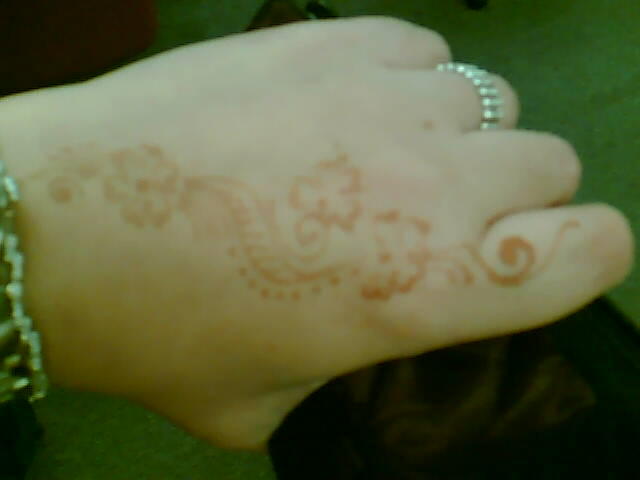
 Didnt know we are expecting some more guest. Wah Cik CK play host for today lah. Ramai gang2 blog nak mai Spore gi umah dia... Just about 5mins after I arrive, Sheryl blog friend Idi (actually its more to Lissa Friend) arrive. He is from KeLanTan but working in States came to Spore for a few weeks on a work assisgnment or project something like that lah.. So instead of meeting Sheryl for the 1st time, then now I got another blogger friend also.. best kan?? I rqsted RauDz to make 2 bracelet for me so that I can give it to CK & Sheryl.. I hope you guys like it.. Its hand made by my sis yo...
 CK masak Nasi Dagang like she mention.. Sedap tu, siap dgn gulai Ikan tongkol tu. Oh ini dia nasi dagang, tak pernah umur aku merasa sebenarnya.. heehehe.. I bought kuih muih & nasi lemak for YaSmiN tapi CK yg makan kot??
 We arrive at SunTec CiTy, our dear Sheryl started shopping for shoes. We went to buy some 'personal apparel' coz its irresistible.. heehehe.. We left SunTech to RaFFleS CiTy MaLL to meet FeiSaL & YasMiN, we had coffee there...
 sang with AzLn A.B.H, posted in her blog. so I chck out her blog right after i get back... tak sabar lagi, wow.. I LOVE the song, even more I too like AzLn ABH (my friendster) songs... My sis RauDz just told me, NaZ could be the song writter for ANZ kot?? I sms NaZ, but she hasnt reply me with the puzzle solving that RauDz & me had now.. heeheh..



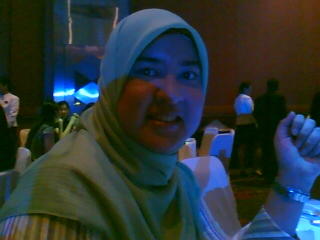 Friday night was the SH Dinner & Dance at Swissotel Westin. Its a yearly event organised by the company. Over 2000 staff attended all over from Shops staff to Call Centre, Network Dept, Cable & Internet... Well this is the time to-check-out on.. hmm.. you-noe-what lah...
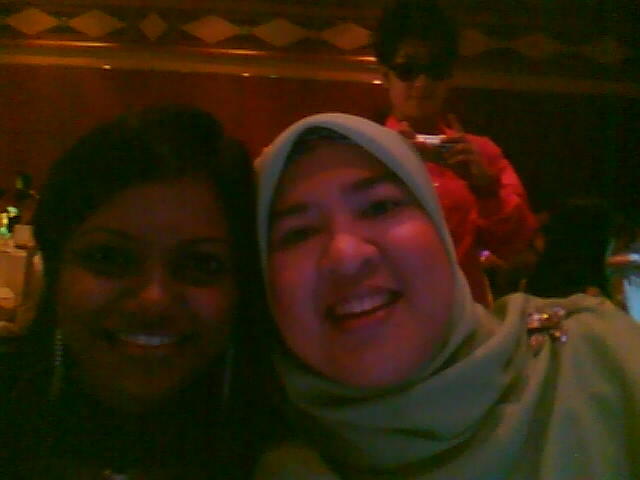

 They finally arrive almost 8pm.. By then I was already hungry.. errr.... W
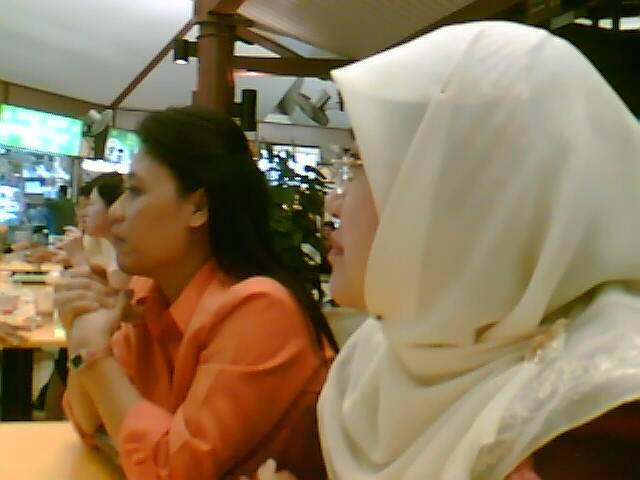




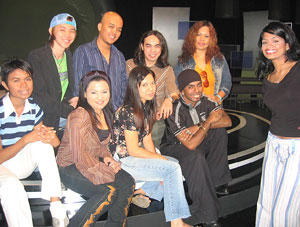
 Abang Dee & Saf feeling shiok eating...
 Cik pun lagi shiok, siap duduk atas bangku dgn kaki kat atas...
 Cousin HaFiZ & his ehemmmm to be, Nilam...
  RauDz building rapport wz Nilam...

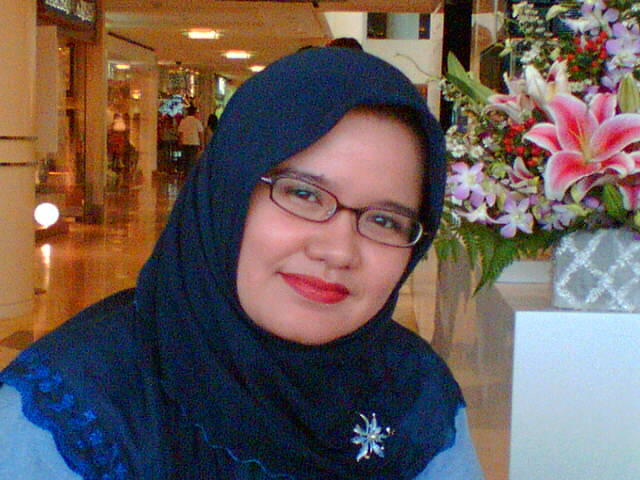
 Anyway Thanks CK, for the nice day out (& the beautiful brooch!)... We will have more of that again Insya ALLAH. This time, we shall fit into Rafthah schedule hopefully she can make it this time...
 On my way back from CiNeLeiSuRe to office, I saw a familiar face. I rememeber this guy, surprisingly he actully smile at me back. hey, I remembered, he's my schoolmate. I stop him, ackno asking "eh u from USTS right???" he said yes.. "You're Yew Pang right?" he said yes, sorry I forgot your name man?" see.. how amazing my memory was. Not bad Noreez.. He was not from my Class but I rememebr him coz we were from the Prefectorial Board... Not much difference in him so that why I could reconized him actully. Surprisingly he can rememeber me. Coz during my sec sch day, I look nerdy man.. with my Big Glasses, long skirt lepas lutut, kurus kering kerempeng.. heehehe.. bottomline is I look different compared to 10 years ago, now more jambu sikit.. haahahah...
 At the end of the show, I was hoping that the Malay Mgr is still at the doorway. I'm glad he was still there. I requested to take back my food.. then I post him this question. "May I ask you something, is your food here HALAL??"



 RauDz & her naughty act again.... *haiya*
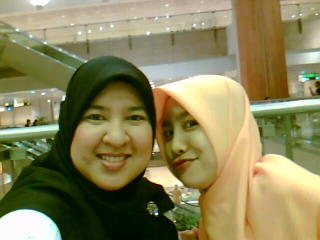 We had a drink at CoffeeBean and we didnt hve to wait that long. Only later we saw someone familiar walking thur the door.. True enough it was DyG & her PR. This time we get to chat alone cause there was no crowd.
 We took a MRT back passesby KemBangan station, heard SpiEeR on stage singing "Buat Sang Puteri", it was so loud, so we dash out following d music instead. Initially I didnt want to stop by to watch cause was thinking I will be working at 11am tmrw.. Anyway it was a good move, no regrets. We manage to catch SpiDeR's last 3 songs & d crowd was not at all rowdy like I expected... Didn't know that they were we last performer.
 So now I back home tug in my bed typing this blog of mine via my N3230 phone.. Not bad right?? Ok now its time for bed, tmrw is another day. Back to work babe..
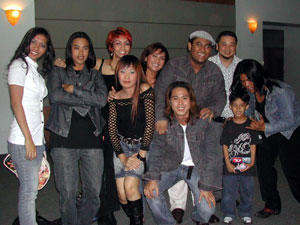 Today's MeLodi brought up the